Learn / Production
Production · 10 min readGarment washes explained: acid, enzyme, stone, pigment dye and more
What every popular streetwear wash looks like, how it's done, what it costs and how to ask your manufacturer for it.
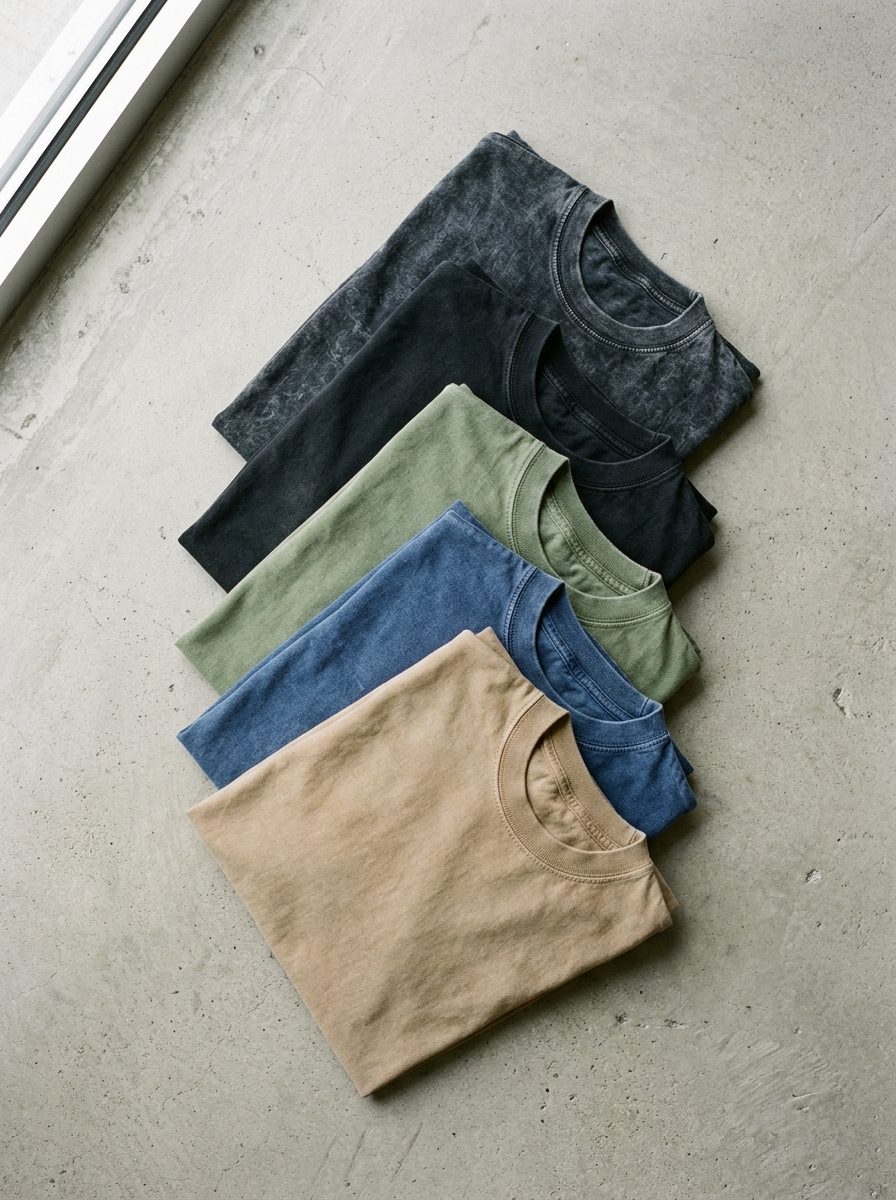
A wash is what turns a new garment into one that looks lived-in. It's one of the fastest ways to make a basic hoodie look premium, and one of the easiest places to get it wrong. Here are the washes you'll see on every streetwear rack, and how to spec them.
Good to know: a wash is done on the finished garment, so every piece comes out slightly different. That's the charm, but tell your customers.
Acid wash
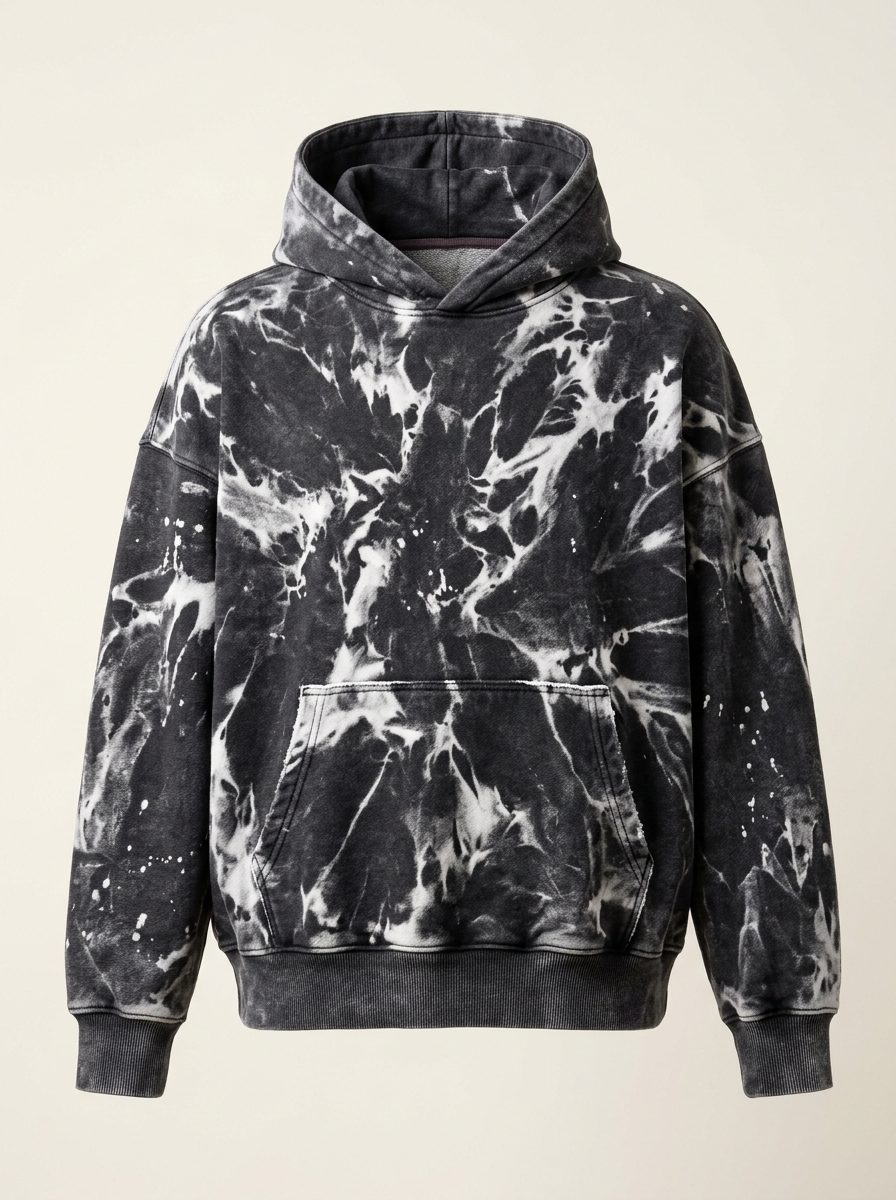
Pumice stones soaked in bleach (usually potassium permanganate) are tumbled with the garments. Where a stone touches, colour is stripped, leaving a high-contrast marble pattern.
- Looks like: dramatic marbled light and dark patches.
- Works best on: dark cotton fleece and jersey.
- Watch out: weakens fabric slightly; ask for neutralising and a softener rinse so the bleach stops working.
Enzyme wash
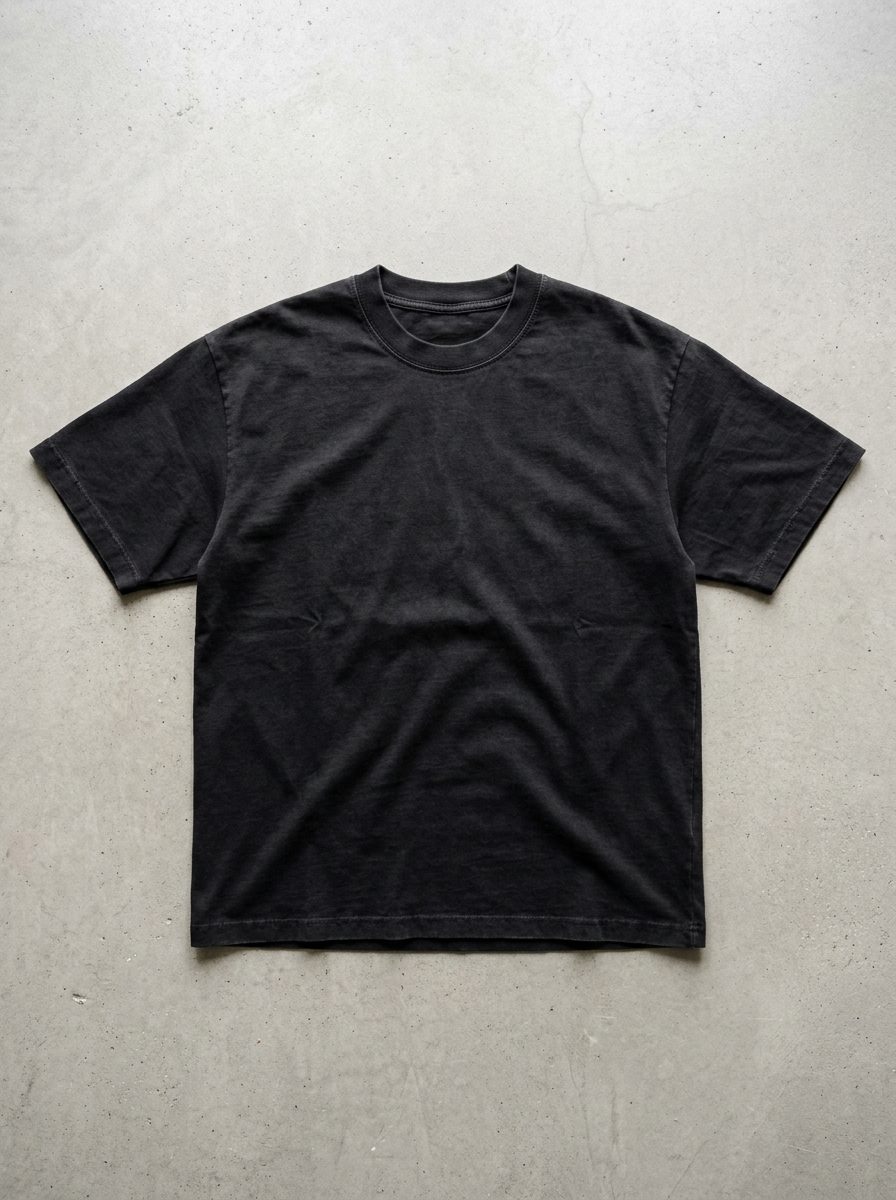
Enzymes eat away loose surface fibres. The result is a softer hand-feel, less pilling and a subtly faded, matte surface.
- Looks like: clean, soft, slightly faded. Very "premium basic".
- Works best on: heavyweight tees and fleece.
- Bonus: reduces shrinkage after the customer's first wash.
Stone wash
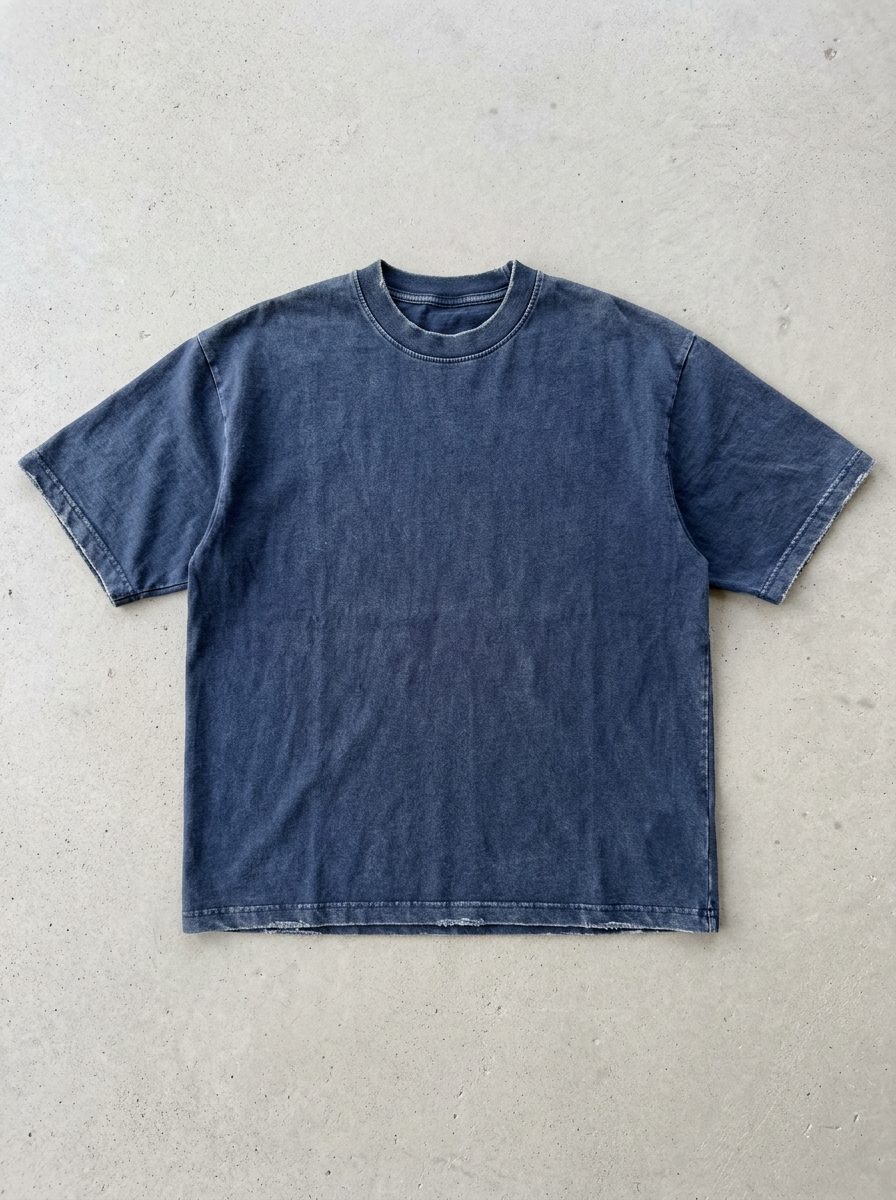
Garments are tumbled with pumice stones (no bleach). The abrasion fades colour most on seams, hems and edges.
- Looks like: worn-in, with lighter edges.
- Works best on: denim, canvas, heavyweight jersey.
Pigment dye
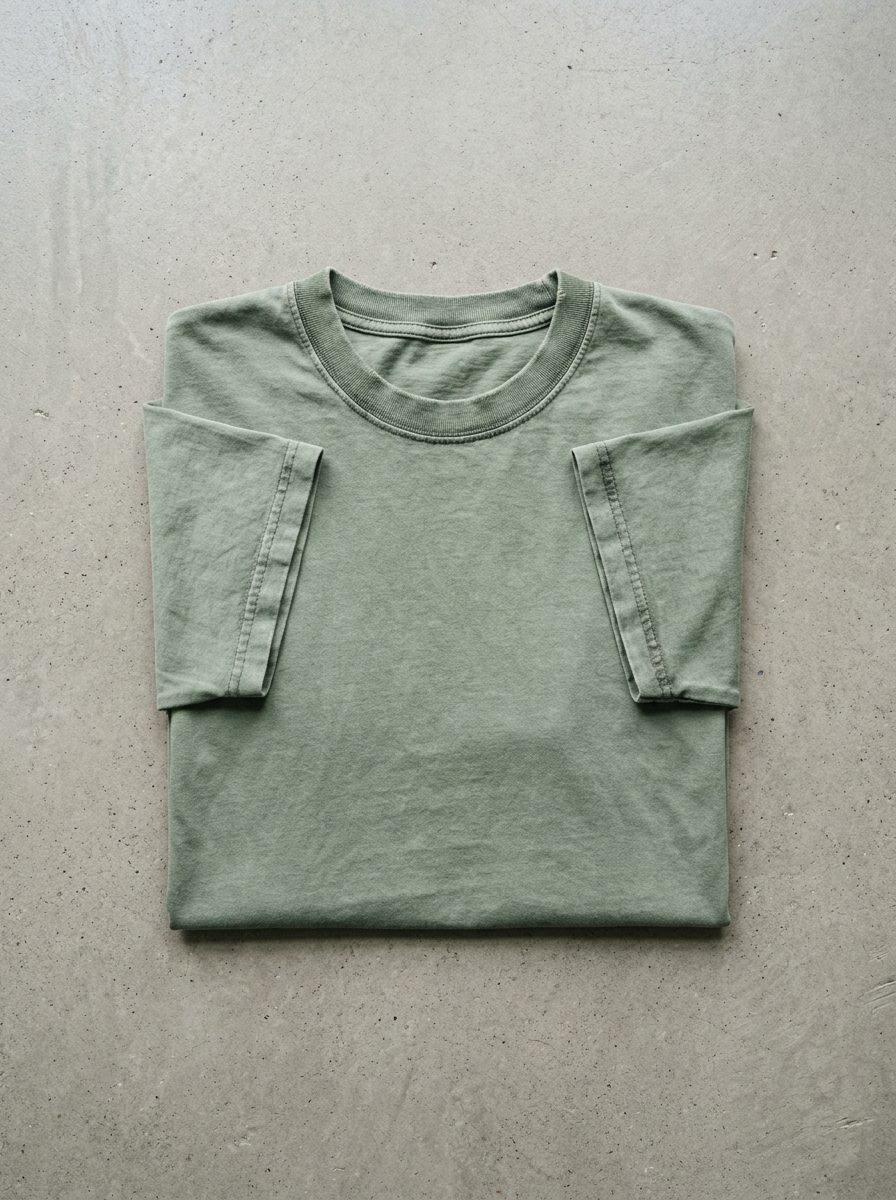
Pigment colour sits on the surface of the fibres instead of inside them. After washing, it fades unevenly, darker at seams, for a chalky vintage look.
- Looks like: muted, chalky colours with darker seams.
- Works best on: cotton tees, crewnecks, caps.
- Watch out: continues to fade with every wash. Mention it on your product page.
Vintage / garment-dyed wash
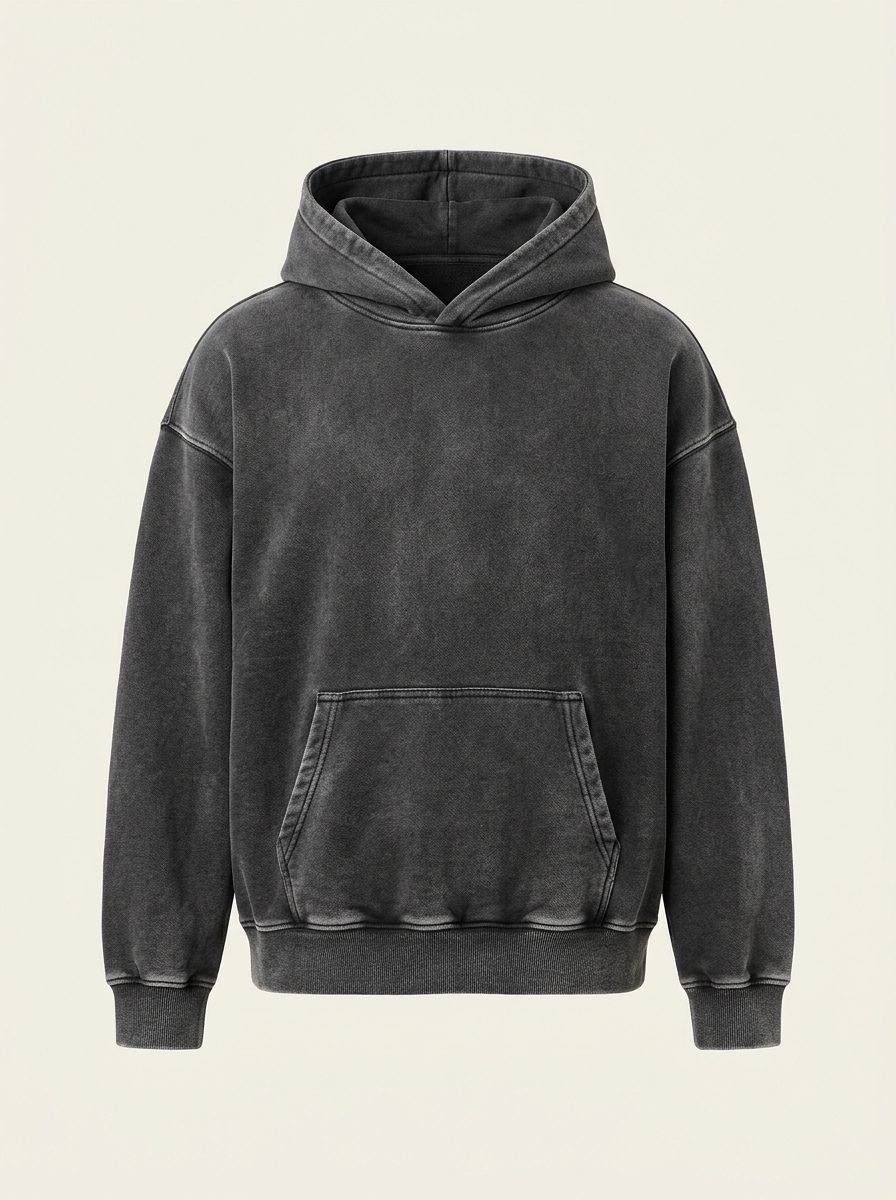
Garments are sewn in undyed (PFD, "prepared for dye") fabric and dyed afterwards, often followed by a softening wash. Thread and fabric take the dye slightly differently, which gives that soft, faded, lived-in look.
- Looks like: soft, faded, rich colour with lighter stitching.
- Bonus: you can often order smaller quantities per colour.
Sun-faded
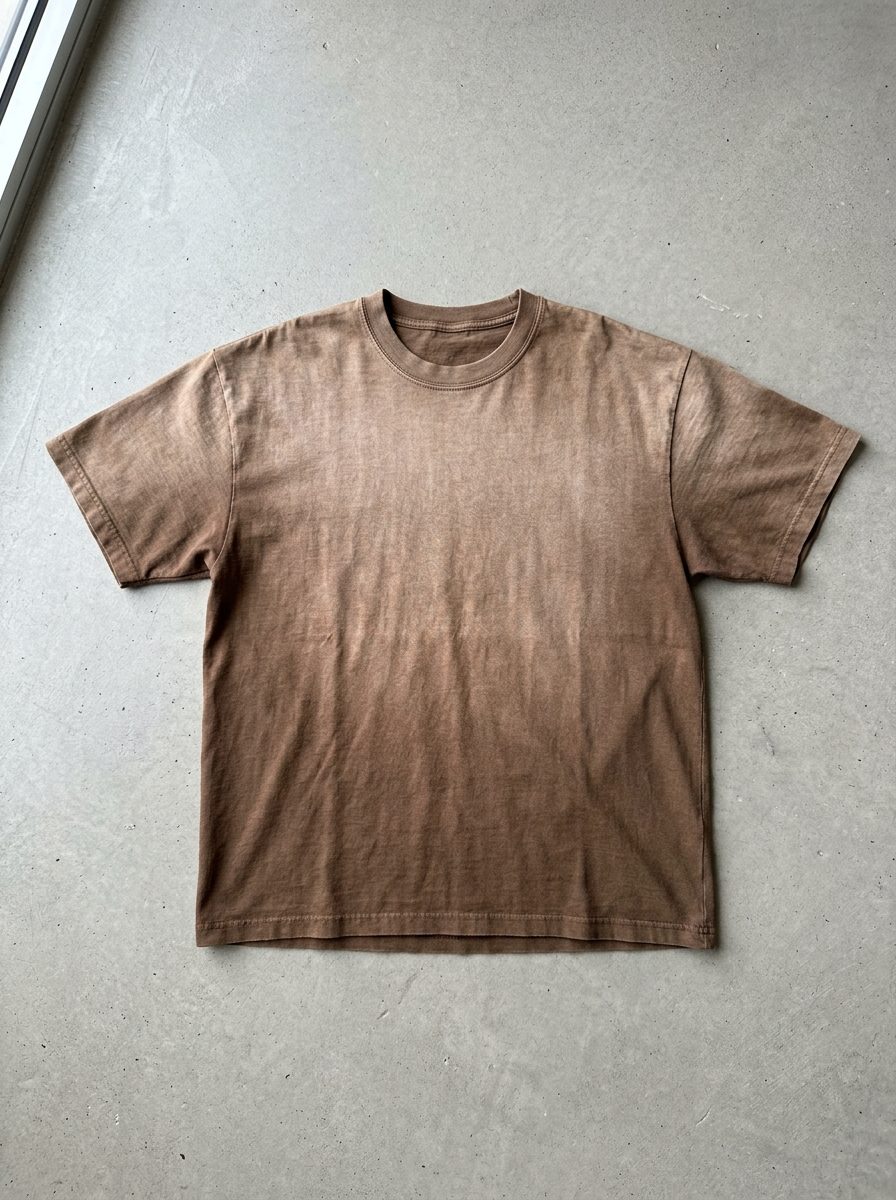
A gradient fade that mimics years in the sun: lighter on the shoulders and upper body. Done with spray bleach or controlled bleaching.
- Looks like: colour gradient from shoulders down.
- Watch out: hard to keep consistent across a run. Approve a reference sample.
Snow wash
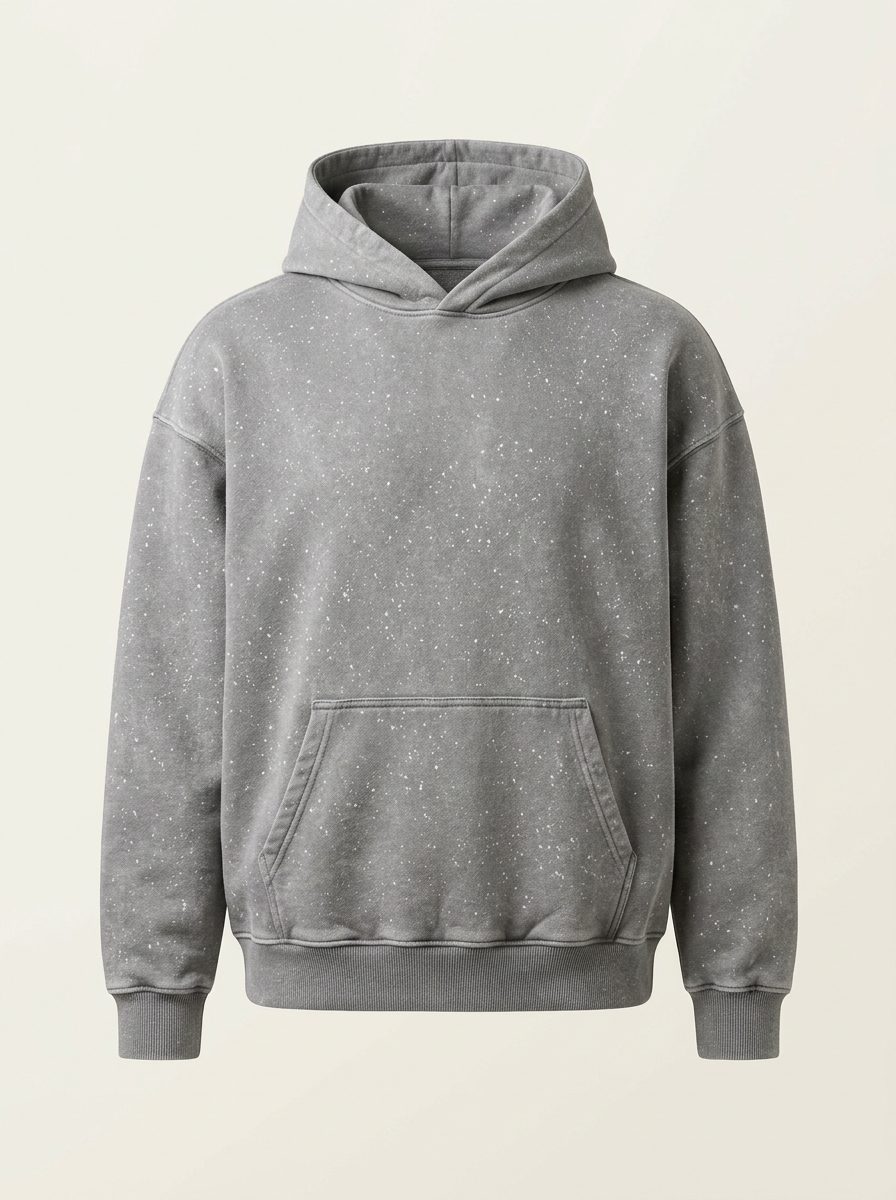
Like acid wash, but with smaller stones and a different technique, leaving fine white speckles instead of large marble patches.
- Looks like: grey with white speckles all over.
How to spec a wash in your tech pack
- Name the wash and attach a reference photo. Words alone are not enough.
- Specify the base colour before washing.
- Ask for shrinkage after washing and give finished measurements after wash.
- Approve a wash standard (a physical reference piece) before bulk.
- Ask about MOQ. Wash houses often have their own minimums, typically 50–100 pieces per wash per colour.
Want to compare costs before you decide? Use the free cost & margin calculator. A wash usually adds €1–5 per piece.
See what a factory-ready tech pack looks like
Download our complete boxy tee tech pack for free: flats, specs, graded measurements and an editable Excel.